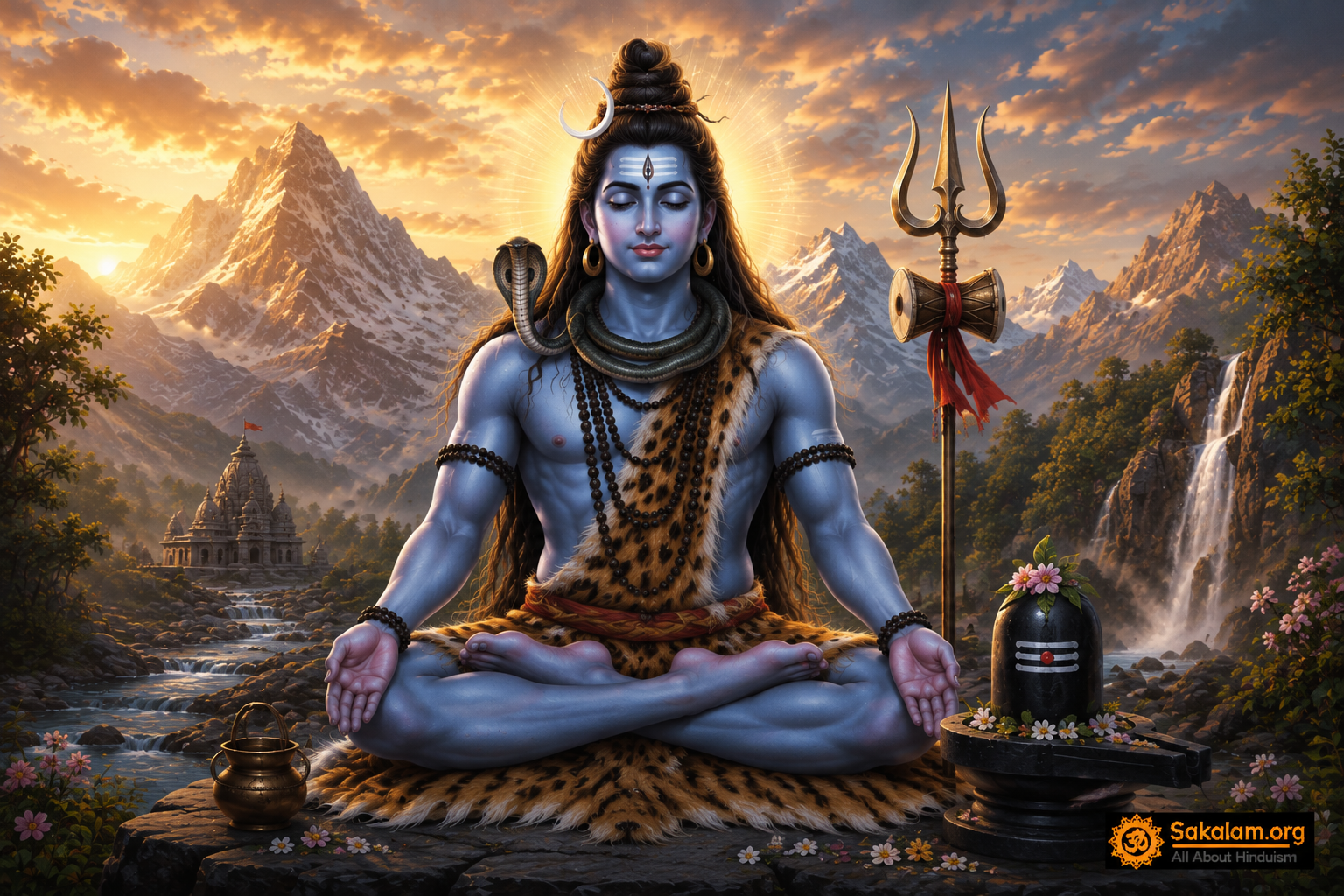
Shiva
Consort of: Parvati
ॐ नमः शिवाय (Om Namah Shivaya)
Vahana: Nandi (Bull)
Also called: Mahadev, Maheshwara, Neelakanta, Eshwara, Chandramouleshwara
Other Forms: Nataraja
Also known as: Raja Rajeswara (Andhra Pradesh & Telangana), Sundareswarar, Natandar (Nataraja), Swami Nathan (Tamil Nadu), Vishwanath (Uttar Pradesh), Mahakaleshwar, Omkareshwar (Madhya Pradesh), Vaidyanath/Baidyanath
About Lord Shiva
Shiva is one of the principal deities of Hinduism, revered as the Destroyer within the Trimurti alongside Brahma the Creator and Vishnu the Preserver. Far from destruction in a purely negative sense, Shiva’s role is transformative, dissolving what is no longer needed to make way for renewal and creation.
Origin and Significance
Shiva is worshipped in many forms across India, as the ascetic seated in meditation atop Mount Kailash, as Nataraja the cosmic dancer, and as the formless Shivalingam found in temples throughout the country. He is considered Adi Yogi, the first yogi, the source from which the practice of yoga itself is said to have originated, transmitted to the Saptarishis at the dawn of the yogic tradition.
Shiva is married to Parvati, and together they are the parents of Ganesha and Kartikeya (Murugan). His iconography is rich with symbolism: the crescent moon in his hair represents time, the Ganga flowing from his locks represents the descent of purity and life, the third eye represents higher wisdom, and the serpent around his neck represents mastery over fear and ego.
Key Aspects of Shiva
- The Destroyer: Dissolves the universe at the end of each cosmic cycle, clearing the way for renewal.
- Adi Yogi: The first yogi, source of the yogic and meditative tradition.
- Adi Guru: The first teacher, who transmitted yoga to the Saptarishis.
- Lord of Dance: As Nataraja, his cosmic dance represents the rhythm of creation, preservation and destruction.
Worship and Rituals
Shiva is worshipped through the chanting of the Panchakshari mantra, abhishekam (ritual bathing of the Shivalingam with milk, water, honey and bilva leaves), and observance of Maha Shivaratri, his most significant annual festival. Monday is considered especially auspicious for Shiva worship, and Pradosh Vrat is observed on the thirteenth day of both lunar fortnights in his honour.
Significance
Shiva represents the principle that destruction and creation are inseparable, that true renewal requires letting go of what came before. Devotees turn to him for inner transformation, the removal of deep obstacles, and liberation (moksha) from the cycle of rebirth.