
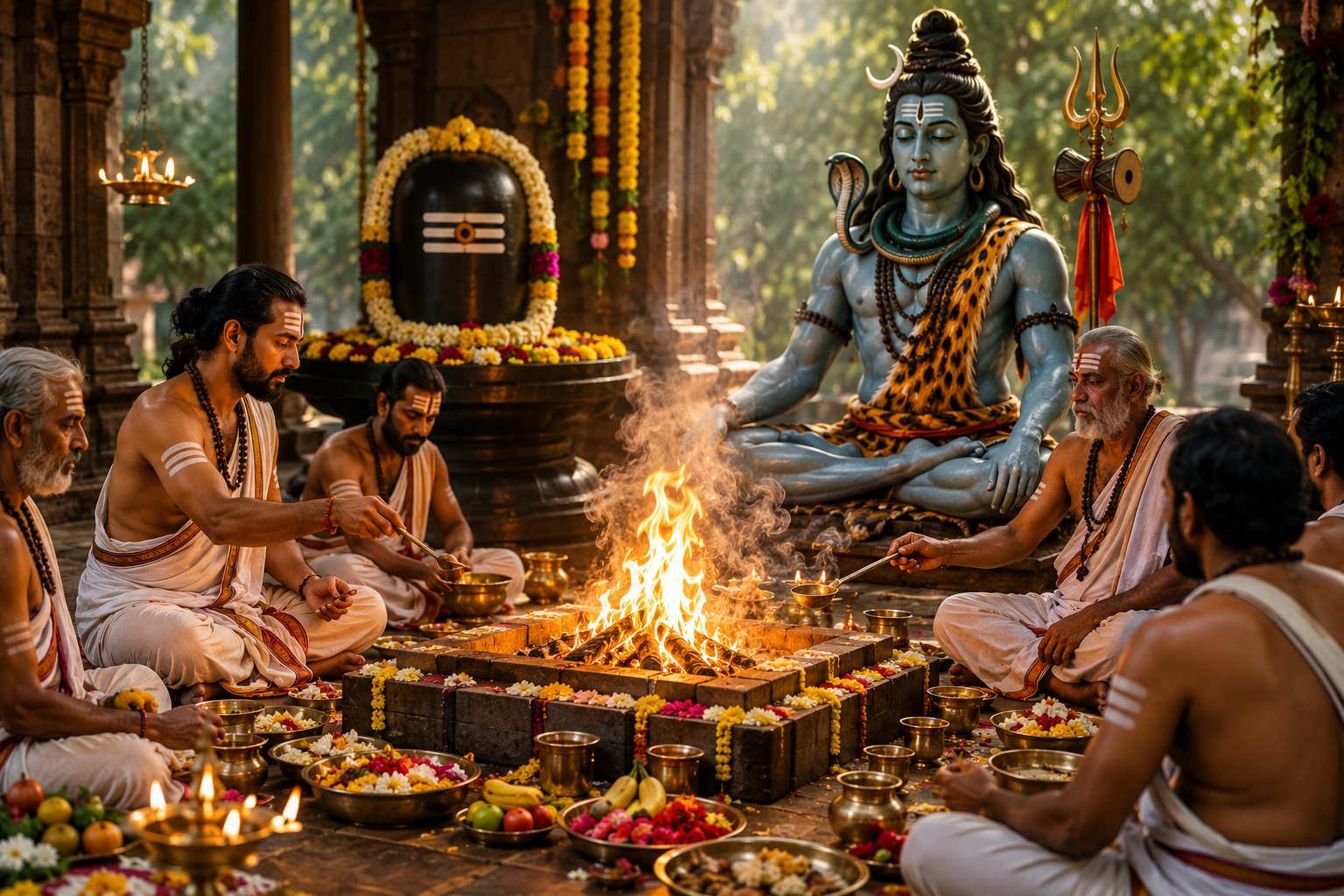

Rudra Homam: The Powerful Fire Ritual for Lord Shiva
ॐ Deities worshipped: Shiva
📅 Best performed on: Can be performed any day of the year
Rudra Homam is a powerful fire ritual for Lord Shiva in his Rudra form. It combines the chanting of the Sri Rudram, one of the most sacred hymns in the Vedas, with offerings made into the sacred fire. It is performed to remove obstacles and negativity.
Who Should Perform Rudra Homam
- Health and longevity concerns: For those recovering from chronic illness, low energy, or seeking protection from untimely death.
- Malefic planetary influences: For those facing bad planetary transits, career delays, or repeated obstacles.
- Birthday and Nakshatra days: Especially auspicious when performed on one’s birth star day or birthday.
- Spiritual growth and peace: For families seeking inner calm, protection from negative energy, and a deeper connection to Shiva.
Significance
The Sri Rudram is a hymn from the Krishna Yajurveda that addresses Shiva in his Rudra form. This is the fierce side of Shiva, the one who clears away what no longer serves so that new growth can begin. The homam is performed by chanting the Rudram in Namakam and Chamakam, often repeated many times, while offerings of ghee, bilva leaves, and sacred herbs are made into the fire.
When to Perform
Rudra Homam is performed to remove major obstacles, recover from ill health, or reduce the effect of malefic planets. It is especially auspicious during Shravana Masam, Karthika Masam, Maha Shivaratri, and Pradosh days.
Not sure which day is right for you? Based on your birth date, Nakshatra, and personal situation, this Homam can also be performed on other suitable days. Contact our Veda Pandith for free guidance on choosing the best day for your Rudra Homam.
The Ritual Process
- Sankalpa and Ganapati Puja: A statement of intent, followed by prayers to Lord Ganesha first, so the ceremony goes smoothly — the standard start for any homam.
- Sri Rudram Chanting: The priest chants the Namakam and Chamakam, repeated as many times as the scale of the homam calls for.
- Offerings into the fire: Ghee, til (sesame seeds), and bilva leaves are offered into the fire throughout the chanting.
- Purnahuti: The final and most important offering, which completes the homam.
- Aarti and Prasad: The ceremony ends with Aarti, followed by Vibhuti (sacred ash) and Prasad given to devotees.
Benefits
- Removes deep-rooted obstacles: Clears negative energy and long-standing problems that other remedies have not fixed.
- Supports health and healing: Believed to help with chronic illness and health problems.
- Reduces the effect of malefic planets: Helps counter bad planetary influences.
- Restores peace at home: Brings harmony and calm within the family.
- Grants spiritual protection: Invokes Shiva’s blessings for continued spiritual growth.