
Vinayaka
ॐ गं गणपतये नमः ॥ (Oṃ gaṃ gaṇapataye namaḥ.)
Vahana: Mūṣakaḥ (Mouse)
Also called: Ganapati, Ganesha, Vakratunda, Vighneshwara, Vignanayaka, Ekadanta, Vakratunda, Lambodara, Gajanana, Gajavaktra, Vighnaraja
Other Forms: Mahotkaṭa, Mahodara, Mayūreśvara, Dhūmraketu, Dhumravarna
Also known as: Vinayagar and Pillaiyar in Tamil Nadu
The Story of Lord Vinayaka
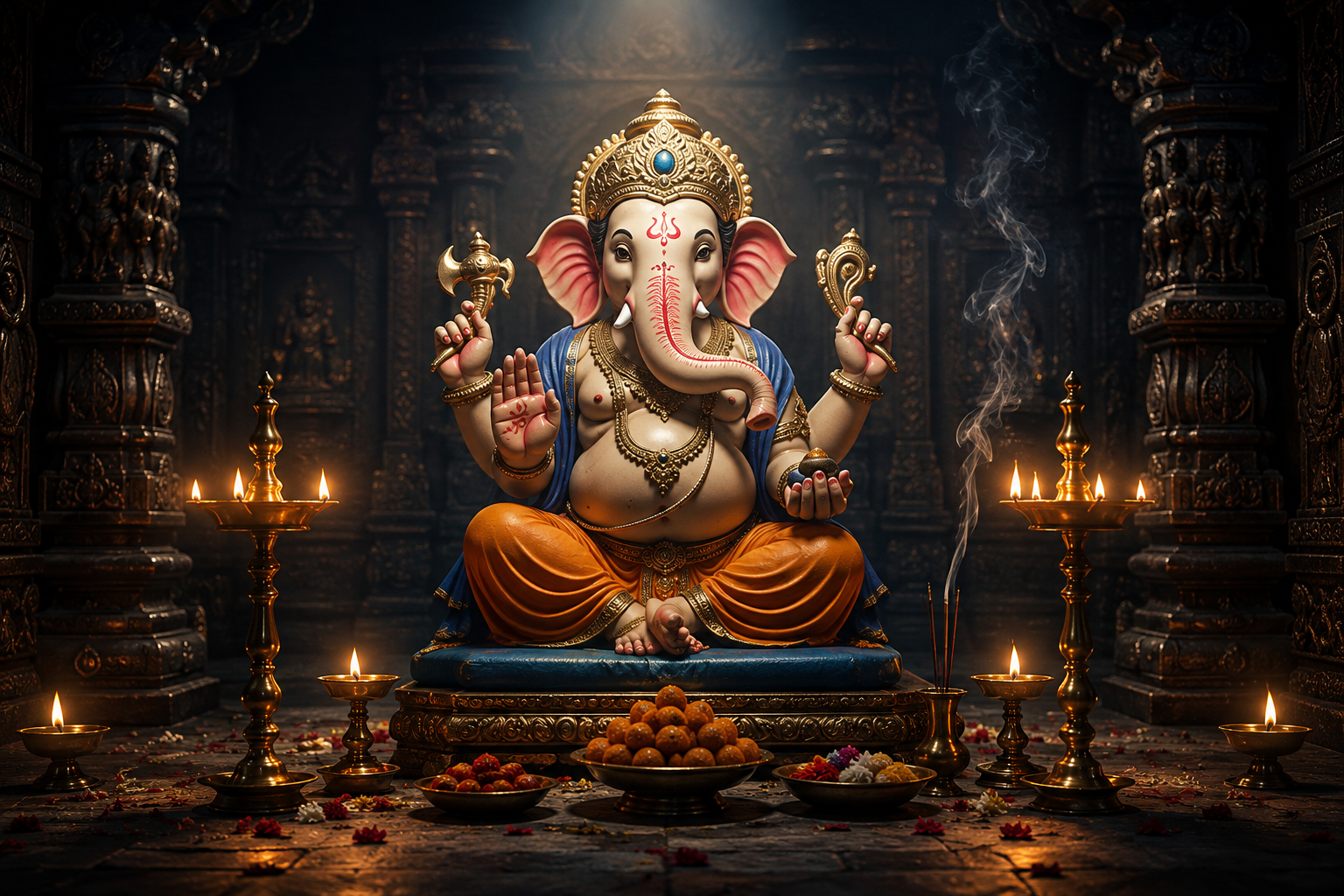
Lord Vinayaka, also known as Ganesha and Ganapati, is one of the most widely worshipped Hindu deities. He is traditionally worshipped at the beginning of important activities and is associated with removing obstacles, wisdom, learning, and auspicious beginnings. An official Tamil Nadu temple source describes Vinayaka as Ganapati, the leader of the gaṇas, and Vighneshvara, the deity who helps devotees overcome obstacles.
In widely known Puranic scriptures, Vinayaka is the son of Shiva and Parvati. Stories about his birth and the origin of his elephant head differ between Hindu texts and regional traditions, so the familiar story should not be treated as the only version.
Vinayaka is also closely connected with the beginning of religious ceremonies. The Tirumala Tirupati Devasthanams describes Ganesha as a deity of beginnings and records the Ganesha Purana as an important text in the Ganapatya tradition.
Vahana
Lord Vinayaka’s commonly recognised vahana is the mouse, known as mūṣaka.
The mouse is a standard feature of Ganesha’s iconography, although some specific forms of Ganesha described in religious traditions are shown with different vehicles.
Names of Ganesha & Meanings
- Vinayaka: A widely used name of Ganesha.
- Ganapati: A name connected with his position as lord or leader of the gaṇas.
- Ganesha: One of his most common names.
- Vighneshvara: Associated with obstacles and their removal.
- Ekadanta: The one-tusked form.
- Lambodara: The form with a large belly.
- Gajanana: The elephant-faced form.
- Vakratunda: The form identified by the curved trunk.
These names come from different layers of Hindu religious and devotional tradition. They are not all names for separate deities.
Forms
Ganesha appears in many forms in Hindu texts and temple traditions.
Ganesha Purana forms: The Ganesha Purana describes major incarnations associated with different yugas, including Mahotkaṭa Vināyaka, Mayūreśvara, Gajānana, and Dhūmraketu. The Tirumala Tirupati Devasthanams identifies the Ganesha Purana as an important text of the Ganapatya tradition.
Mudgala Purana forms: Another Purāṇic tradition gives eight major forms: Vakratuṇḍa, Ekadanta, Mahodara, Gajavaktra, Lambodara, Vikaṭa, Vighnarāja, and Dhūmravarṇa.
Temple traditions: Ganesha is also worshipped in many forms used for particular devotional purposes. TTD’s Dharmagiri Veda Vignana Peetham, for example, used forms such as Bala Ganapati, Srishti Ganapati, Ekadanta Ganapati, Durga Ganapati, Dundhi Ganapati, Yoga Ganapati, Kshipra Ganapati, Veera Ganapati, Maha Ganapati, and Siddhi Buddhi Ganapati during its Ganesha Navaratri observance.
Regional Names
- Vinayagar – Tamil Nadu: A common Tamil form of Vinayaka.
- Pillaiyar – Tamil Nadu: A widely used Tamil name for Ganesha.
- Ganapati – Maharashtra: A particularly prominent form of the name in Maharashtra.
Regional usage can overlap. For example, Ganapati is not limited to Maharashtra, and Vinayaka is not limited to Tamil Nadu.
Scripture Reference
Ganesha Purana
The Ganesha Purana is a Sanskrit Upapurana devoted extensively to Ganesha. It contains mythology, theology, philosophy, stories, and accounts of Ganesha’s different forms. The Tirumala Tirupati Devasthanams identifies it as an important text for the Ganapatya tradition.
Mudgala Purana
The Mudgala Purana is another important text in the Ganesha tradition. It presents the eight major forms of Ganesha listed above.
Ganapati Atharvashirsha
The Ganapati Atharvashirsha, also known as the Ganapati Upanishad, is a Sanskrit text centred on Ganapati. It is widely recited in Ganapati worship.
Shiva Purana Tradition
Stories about Ganesha’s birth and his relationship with Shiva and Parvati also appear in Shaiva Purāṇic traditions. A religious publication issued by Tirumala Tirupati Devasthanams presents a Shiva Purana account in which Parvati creates Ganapati to guard her entrance, followed by the well-known episode involving Shiva and the elephant head.
Regional Variations in the Story
The story of Vinayaka’s birth is not identical in every Hindu tradition.
One widely known version describes Parvati creating Ganapati as a guardian and Shiva later replacing his severed head with that of an elephant. Other traditions give different details about his birth and forms. The safest approach is to identify the source when presenting a particular version as a story from scripture.
Frequently Asked Questions
Why is Ganesha called Vinayaka?
Vinayaka is one of the established names of Ganesha. The name is widely used in Sanskrit and regional Hindu traditions.
Why is Ganesha worshipped before starting something new?
Ganesha is traditionally associated with auspicious beginnings and the removal of obstacles. This practice is also reflected in temple traditions.
Are all Ganesha forms found in one scripture?
No. Different texts describe different forms. The Ganesha Purana and Mudgala Purana have their own traditions of Ganesha's forms.
Is the Ganesha birth story the same everywhere?
No. Details vary between Purāṇic and regional traditions. It is better to identify the source when presenting a particular version.