Lakshmi
Consort of: Vishnu
ॐ श्रीं महालक्ष्म्यै नमः ॥ (Oṃ śrīṃ mahālakṣmyai namaḥ.)
Vahana: Uluka (Owl)
The Story of Goddess Lakshmi
Goddess Lakshmi is worshipped as Sri, the goddess associated with prosperity, good fortune, abundance, beauty, and well-being. She is traditionally regarded as the consort of Lord Vishnu and is an important deity in Vaishnava worship. Tirumala’s religious publications describe Maha Lakshmi as closely connected with Lord Venkateswara and identify Sri as the goddess associated with Vishnu.
One of the best-known stories of Lakshmi is connected with the churning of the Milk Ocean. In the Vishnu Purana, Lakshmi appears during the churning and takes her place with Vishnu. The same text also connects Lakshmi with different manifestations of Vishnu, including Sita with Rama and Rukmini with Krishna.
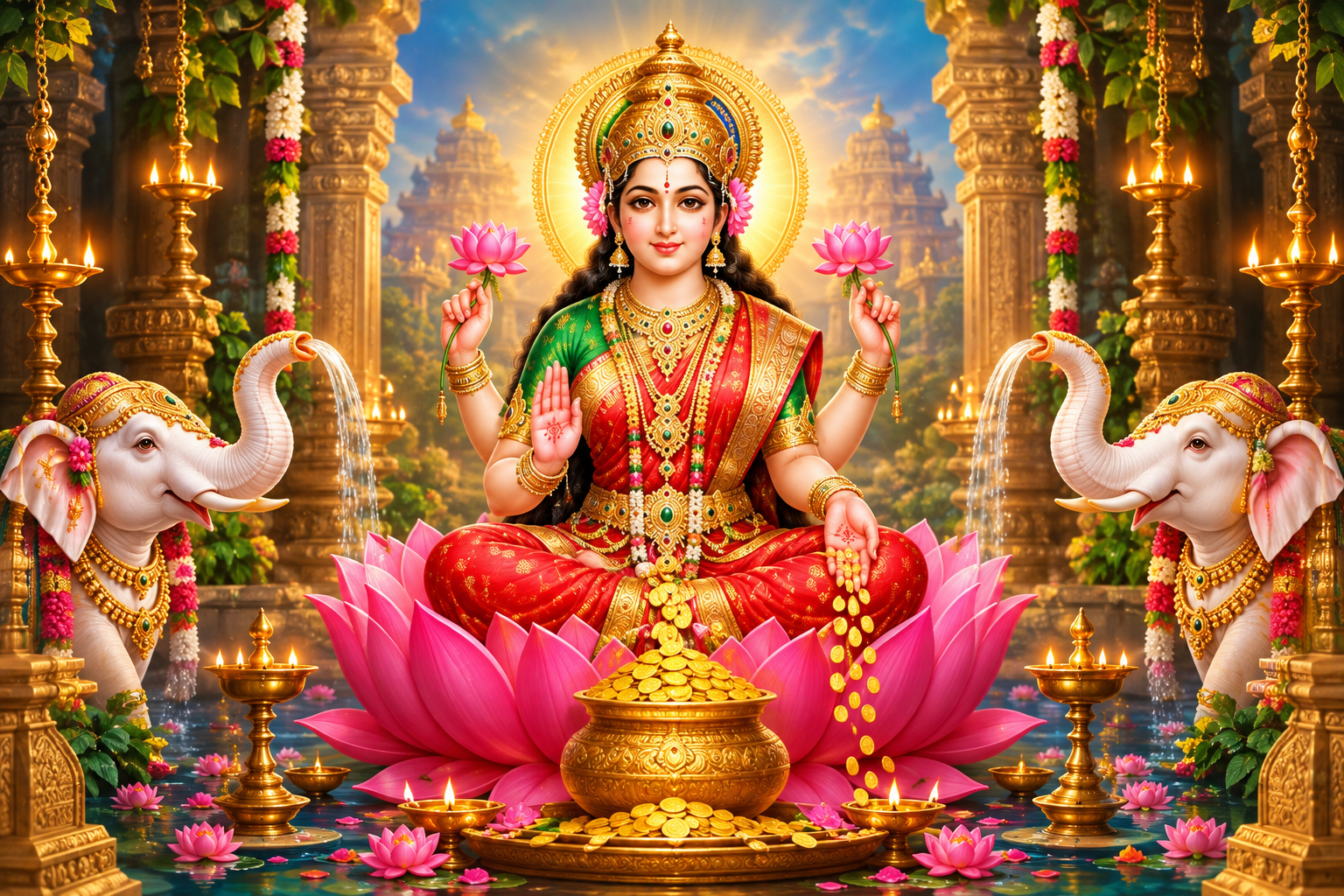
Lakshmi is often shown seated or standing on a lotus. The lotus is an important part of her iconography and is also reflected in names such as Padma and Kamala.
The Sri Sukta is another major text used in Lakshmi worship. It is traditionally associated with the Vedic tradition and is recited in temples and by many devotees at home as well.
Vahana
The owl is commonly associated with Lakshmi’s vahana in Hindu iconography.
Lakshmi is also frequently shown with elephants. The elephants are especially prominent in images of Gaja Lakshmi, where they appear beside or above the goddess.
Because Lakshmi’s iconography differs across traditions, the owl and elephant should not be treated as interchangeable descriptions of one fixed form.
Epithets and Other Names
- Sri: A major name of Lakshmi and an important term in Vaishnava traditions.
- Mahalakshmi: A widely used name for Lakshmi in her great or supreme form.
- Padma: A name associated with the lotus.
- Kamala: Another lotus-related name.
- Indira: A traditional name of Lakshmi.
- Rama: A traditional name used for Lakshmi in some Sanskrit sources.
- Vishnupriya: “Beloved of Vishnu.”
- Haripriya: “Beloved of Hari.”
Names can have different meanings and uses in different texts. They should not automatically be treated as separate forms of the goddess.
Forms
Lakshmi is worshipped in many forms.
Ashta Lakshmi: A widely used devotional grouping is the eight Lakshmis, commonly including:
- Adi Lakshmi: The primordial form.
- Dhanya Lakshmi: Associated with food and agricultural abundance.
- Dhairya Lakshmi: Associated with courage and strength.
- Gaja Lakshmi: Associated with royal prosperity and abundance.
- Santana Lakshmi: Associated with children and family continuity.
- Vijaya Lakshmi: Associated with victory.
- Vidya Lakshmi: Associated with knowledge.
- Dhana Lakshmi: Associated with wealth.
The exact names and grouping can vary. Some traditions use Veera Lakshmi instead of Dhairya Lakshmi, while other traditions use different forms or names.
The official Tamil Nadu HR&CE page for the Mahalakshmi Temple in Besant Nagar, Chennai, describes a temple with separate shrines for eight forms of Lakshmi. This confirms the Ashta Lakshmi tradition in that temple, although individual temple traditions may arrange or name the forms differently.
Gaja Lakshmi: Lakshmi is shown with elephants and is commonly associated with prosperity and royal abundance.
Dhana Lakshmi: This form is associated specifically with wealth and material resources.
Vidya Lakshmi: This form is associated with knowledge and learning.
Regional Names
- Sri Devi — South Indian Sri Vaishnava tradition: Sri Devi is a traditional name and form of Lakshmi associated with Vishnu. Tirumala temple literature uses the name Sri Devi for one of Lord Venkateswara’s consorts.
- Thayar — Tamil Sri Vaishnava tradition: Thayar is a respectful title used for the goddess or divine consort in Tamil Vaishnava temples. Official Tamil Nadu temple records use this title for Lakshmi-related consorts.
- Mahalakshmi — Tamil Nadu: Mahalakshmi is used as the principal name of the deity at the official Mahalakshmi Temple in Besant Nagar, Chennai.
These are usage patterns rather than exclusive regional names. Lakshmi and Sri are used widely across India.
Scripture Reference
Sri Sukta
The Sri Sukta is one of the most important Vedic hymns associated with Lakshmi worship. The Vedic Heritage Portal lists Shri Sukta among its Vedic Sukta collection. A publication hosted by the Vedic Heritage Portal describes Sri Sukta, also called Lakshmi Sukta, as occurring in the Khila material associated with the Rigveda tradition.
This distinction matters: the Sri Sukta is traditionally connected with the Rigvedic tradition, but it should not simply be described as one of the regular hymns of the Rigveda’s main ten Mandalas.
Vishnu Purana
The Vishnu Purana, Book I, Chapter 9, is an important source for the story of Lakshmi. It describes the churning of the Milk Ocean, Lakshmi’s appearance, her association with Vishnu, and her manifestations alongside Vishnu’s incarnations.
Devi Bhagavata Purana
The Devi Bhagavata Purana, Book 9, Chapter 41, also contains an account of the churning of the Milk Ocean and Lakshmi’s appearance. In this account, Lakshmi emerges from the ocean and accepts Vishnu.
Padma Purana
The Padma Purana also connects the churning of the Milk Ocean with Lakshmi and mentions the recitation of the Sri hymn in connection with the episode.
Confidence: High for the Vishnu Purana, Devi Bhagavata Purana, Padma Purana, and Sri Sukta references above. The exact form and interpretation of Lakshmi can differ between Vaishnava, Shakta, and regional traditions.
Regional Variations in the Story
The main story of Lakshmi emerging from the Milk Ocean is found in several Purāṇic traditions, but the details are not identical in every text.
There are also traditions in which Lakshmi has an earlier birth or manifestation. For example, the Vishnu Purana describes Sri as the daughter of Bhrigu and Khyati before describing her later appearance from the ocean.
This is why Sakalam.org should avoid presenting only one birth account as if it were the sole Hindu tradition.
Significance and What It Teaches
Lakshmi is traditionally associated with prosperity, but her significance is broader than money. The Sri Sukta tradition connects her with abundance, well-being, reputation, and a prosperous life.
Her association with Vishnu also gives Lakshmi an important place in Vaishnava theology. At Tirumala, temple literature identifies Sri Maha Lakshmi with the divine presence of Vishnu and describes Sri Devi and Bhu Devi alongside Lord Venkateswara.
The lotus associated with Lakshmi is also an important symbol in her iconography. It connects her imagery with purity, beauty, and auspiciousness.
FAQs
Is Lakshmi the wife of Vishnu?
Yes. Lakshmi is traditionally regarded as the consort of Vishnu. The Vishnu Purana also describes her appearing alongside Vishnu in his different manifestations.
Why is Lakshmi associated with wealth?
Lakshmi is traditionally associated with prosperity and abundance. The idea is broader than money and can include food, well-being, success, resources, and good fortune.
What is the Sri Sukta?
Sri Sukta is a Vedic hymn associated with Sri or Lakshmi. It is widely used in Lakshmi worship and is listed by the Vedic Heritage Portal among its Vedic Sukta resources.
Why does Lakshmi sit on a lotus?
The lotus is a central feature of Lakshmi’s traditional iconography. It is also reflected in her names Padma and Kamala.
What are the eight forms of Lakshmi?
A common Ashta Lakshmi tradition includes Adi, Dhanya, Dhairya, Gaja, Santana, Vijaya, Vidya, and Dhana Lakshmi. The exact names and arrangement vary between traditions.
Is Lakshmi the same as Sita?
In Vaishnava traditions, Sita is understood as Lakshmi’s manifestation or counterpart in Rama’s incarnation. The Vishnu Purana explicitly connects Lakshmi with Sita when Vishnu appears as Rama.
Suggested excerpt/meta description
Learn about Goddess Lakshmi, her mantra, vahana, names, forms, Sri Sukta, Puranic stories, and her place in Hindu worship.
Suggested fields/tags
- Primary mantra + IAST: ॐ श्रीं महालक्ष्म्यै नमः — Oṃ śrīṃ mahālakṣmyai namaḥ
- Vahana: Owl; elephants associated with Gaja Lakshmi iconography
- Epithets: Sri, Mahalakshmi, Padma, Kamala, Indira, Rama, Vishnupriya, Haripriya
- Forms list: Adi Lakshmi, Dhanya Lakshmi, Dhairya Lakshmi, Gaja Lakshmi, Santana Lakshmi, Vijaya Lakshmi, Vidya Lakshmi, Dhana Lakshmi
- Regional names: Sri Devi — South Indian Sri Vaishnava tradition; Thayar — Tamil Sri Vaishnava tradition; Mahalakshmi — Tamil Nadu
- Scripture reference tag: Sri Sukta; Vishnu Purana; Devi Bhagavata Purana; Padma Purana
- Associated festivals/homas/stotras: Diwali Lakshmi Puja, Varalakshmi Vratam, Kojagari Lakshmi Puja, Sri Sukta, Lakshmi Ashtottara Shatanama, Lakshmi Sahasranama
Notes on verification
- Sri Sukta: High confidence. I used the Government of India’s Vedic Heritage Portal as the primary Vedic source.
- Lakshmi and Vishnu: High confidence. The Vishnu Purana source gives the relevant account in Book I, Chapter 9.
- Ashta Lakshmi: High confidence that the eight-form tradition is established, but individual names and ordering vary between traditions. The official Tamil Nadu HR&CE Mahalakshmi Temple confirms eight Lakshmi shrines at its Besant Nagar temple.
- Mantra: High confidence that Oṃ śrīṃ mahālakṣmyai namaḥ is a widely used devotional mantra. I have not claimed that this exact short mantra is a verse from the Sri Sukta.
- Regional names: The terms Sri Devi and Thayar are well established in South Indian Vaishnava temple usage. They are not exclusive names used only in one state.
- Vahana: The owl is widely associated with Lakshmi, but iconographic traditions differ. I have therefore also noted the important elephant imagery of Gaja Lakshmi rather than presenting one vehicle as universal.