
Narasimha Jayanti 2027: Date, Story and Puja Vidhi
ॐ Deities worshipped: Narasimha, Vishnu
Narasimha Jayanti is celebrated in Andhra Pradesh, Karnataka, Tamil Nadu and Telangana.
📅 18 Oct 2027
Also called: Narahari, Auri Madhya Vishnu, Lakshmi Narasimha Swamy, Hiranyakashipu Ari, Ugra Narasimha
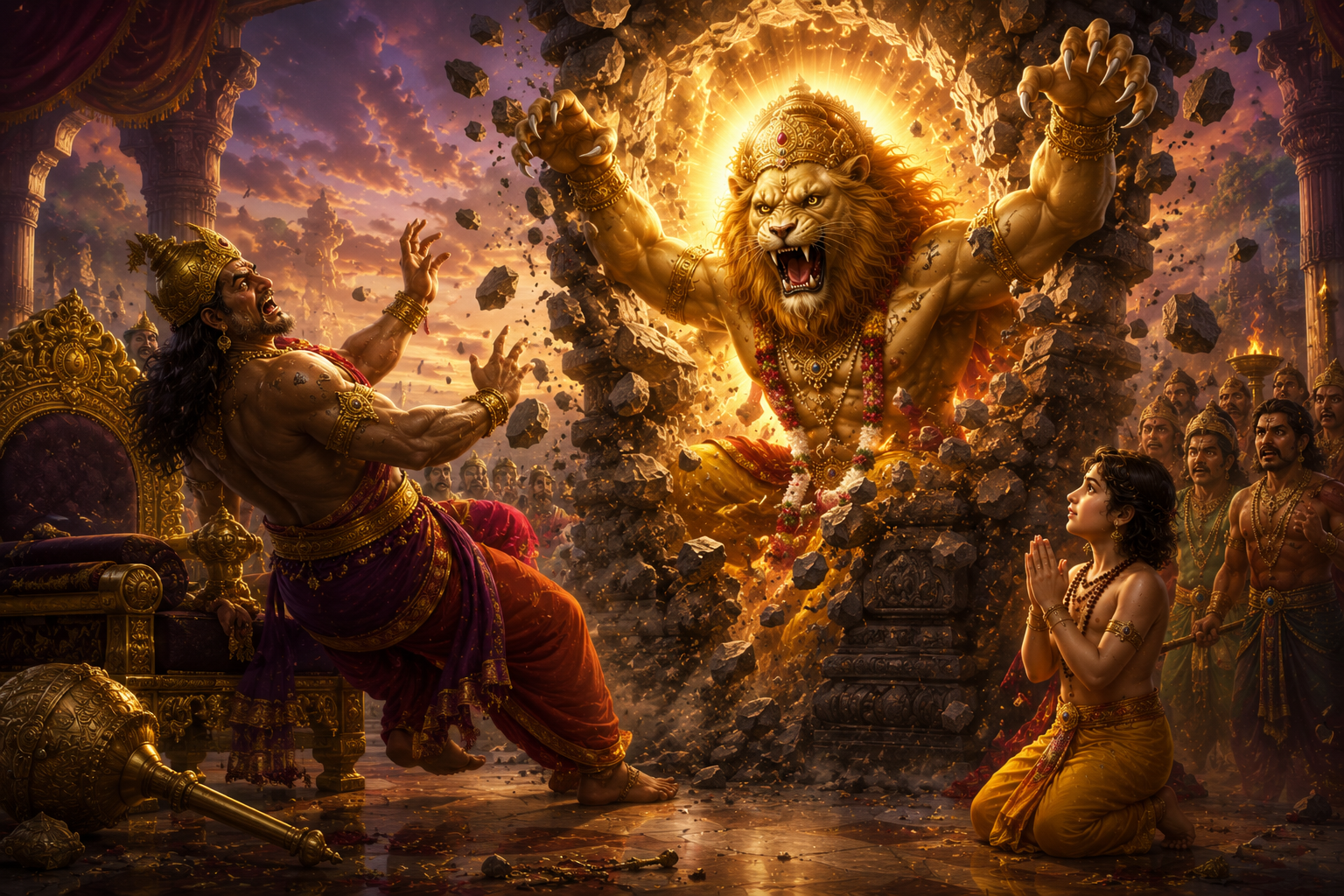
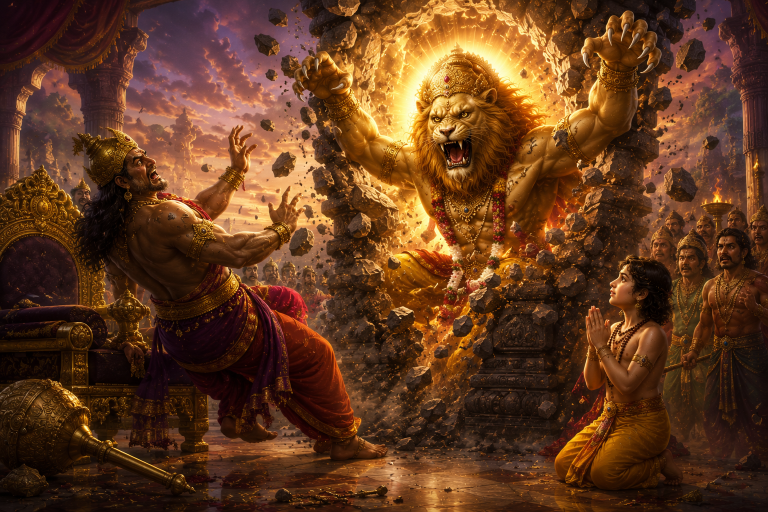
Narasimha Jayanti is a Hindu festival dedicated to Lord Vishnu, observed on Vaisakh Chaturdashi of Shukla Paksha. It marks the day Vishnu took the form of Narasimha, half-man and half-lion, the fourth incarnation of his Dashavatara.
Lord Vishnu, in his Narasimha avatar – worshipped along with Goddess Lakshmi.
Especially significant in South India, home to many Narasimha Swamy temples dedicated to the Lord along with his consort, Goddess Lakshmi. These temples hold special pooja and celebrations on this day, drawing devotees to pray at the temple.
Lord Narasimha also called Narahari, Auri Madhya Vishnu, Lakshmi Narasimha Swamy, Hiranyakashipu Ari.
According to the Puranas, the Narasimha form appeared at sunset on Chaturdashi, which is why the rituals are carried out around sunset.
Story of Narasimha Jayanti
Hiranyakashipu received a unique boon from Lord Brahma that made him nearly impossible to defeat. As his atrocities grew, he tried to kill his own son, Prahlad, a devotee of Lord Vishnu.
To protect Prahlad, Lord Vishnu took the form of Narasimha and killed Hiranyakashipu, showing that dharma prevails. Vishnu took this avatar on Vaisakh Chaturdashi specifically to kill the demon, his fourth incarnation, with the face of a lion and the body of a man.
How Narasimha Jayanti Is Observed
- Devotees observe a fast.
- They wake early in the morning, bathe, and prepare for the puja.
- An idol or picture of Lord Narasimha and Goddess Lakshmi is placed on the altar and decorated with flowers.
- Gram dal and jaggery are offered to the deity.
- Sweets, kumkum, and kesar are also offered.
- The Narasimha mantra is recited using a rudraksh mala.
- Devotees donate clothes, sesame seeds, and precious metals to the poor.
- Sankalp is taken in the afternoon, and puja is performed in the evening before sunset.
- The fast continues until the next morning and is broken once the Chaturdashi tithi ends.
Lord Narasimha Maha Mantra
Om hrim ksaumugram viram mahavivnumjvalantam sarvatomukham |
Nrsimham bhisanam bhadrammrtyormrtyum namamyaham ||
Meaning: “Oh angry and brave Maha-Vishnu, your heat and fire permeate everywhere. O Lord Narasimha, you are everywhere. You are the death of death and I surrender to You.”
Ugram viram maha-vishnum jvalantam sarvato mukham |
nrisimham bhishanam bhadram mrityur mrityum namamy aham ||
Meaning: “I bow down to Lord Narasimha swamy, who is ferocious and heroic like Lord Vishnu. He is burning from every side. He is terrific, auspicious, and the death of death personified.”
Significance
- Lesson in dharma: the festival teaches that good deeds and living by dharma bring the best outcomes, while adharma leads to an end like Hiranyakashipu’s.
- Relief from problems: fasting on this day is believed to bring respite from all problems.
- Benefits of chanting the mantra: believed to remove suffering, alleviate troubles, and bestow fearlessness, peace, prosperity, and tranquility.
Scripture Reference
The Narasimha avatar is most extensively described in the Bhagavata Purana (Skandha/Canto 7), which contains the full Prahlad-Hiranyakashipu narrative and Narasimha’s appearance. An earlier, shorter version also appears in the Vishnu Purana (Book 1, Chapters 16-20).
Frequently Asked Questions
What made Hiranyakashipu believe he could not be killed?
According to the legend, his boon from Brahma meant he could not be killed by man or animal, during day or night, indoors or outdoors, on earth or in the sky, or by any weapon. Narasimha's form, half-man, half-lion, appearing at twilight, on a threshold, using claws rather than a weapon — worked around every condition