
Thirupparankundram Murugan Temple – History, Significance and Deivayani Marriage
ॐ शरवणभवाय नमः (Om Sharavana Bhavaya Namah!)
The temple is open daily for devotees from 5:30 AM to 1:00 PM in the morning, and 4:00 PM to 9:00 PM in the evening.
👥 Expect heavy crowds on April-May
Visit Thirupparankundram Murugan Temple, Madurai
🕑 Temple timings
Daily
📍 Address and contact
146a, Periya Ratha Veethi, Thiruparankundram, Tamil Nadu 625005
Plan Your Visit
About the Temple
Arulmigu Subramaniya Swami Temple at Thirupparankundram is an ancient Hindu temple dedicated to Lord Murugan, about 8 km south of Madurai in Tamil Nadu. It is traditionally regarded as the first of Murugan’s six sacred abodes (Arupadai Veedu) and is especially associated with Murugan’s divine marriage to Deivayani, the daughter of Indra.
Why is Thiruparankundram important to Lord Murugan?
Thiruparankundram is traditionally counted as the first of the six sacred abodes of Lord Murugan, known as the Arupadai Veedu.
The temple is especially associated with the marriage of Murugan and Deivayani, the daughter of Indra. According to traditional scriptures, this marriage took place after Murugan defeated the asura Surapadman.
This gives Thiruparankundram a distinctive place in the six-abode tradition. While Tiruchendur is associated particularly with Murugan’s victory over Surapadman, Thiruparankundram is associated with the divine marriage that follows that victory.
Deivayani & Murugan Marriage
Deivayani is the daughter of Indra, the king of the devas. She is also known in Sanskrit traditions as Devasena.
The marriage of Murugan and Deivayani is one of the principal sacred traditions associated with Thiruparankundram.
According to the traditional Murugan story, the asura Surapadman had caused suffering among the devas. Lord Murugan fought against him and defeated him at Tiruchendur.
Following this victory, Indra expressed his gratitude to Murugan and offered his daughter Deivayani in marriage. The divine wedding is traditionally associated with Thiruparankundram.
The story is preserved within the wider Kanda Puranam (Skanda Puranam) tradition and other Tamil devotional traditions associated with Lord Murugan. Thiruparankundram is traditionally regarded as the first of the six sacred abodes of Lord Murugan, collectively called the Arupadai Veedu.
The six sacred temples are associated with different episodes and aspects of Murugan’s traditional life and worship. Thiruparankundram is particularly connected with his marriage to Deivayani.
While Tiruchendur is associated with Murugan’s victory over Surapadman and Palani is associated with Murugan as Dhandayuthapani. These are connected traditions, but the temples are separate pilgrimage centres.
Daily Seva Timings
| Timings | Poojai / Darshan details |
| 5:00 am | Temple Opening Hours |
| 5:30 am – 6:00 am | Thiruvananthal |
| 6:00 am – 7:30 am | Darshan |
| 7:30 am – 7:50 am | Vizha Pooja |
| 8:00 am – 8:20 am | Kalasanthi |
| 8:30 am – 10:00 am | Darshan |
| 10:00 am – 10:30 am | Thirukaka Santhi |
| 10:30 am – 12:00 pm | Darshan |
| 12:00 pm – 12:30 pm | Uchikalam |
| 12:30 pm – 1:00 pm | Darshan |
| 1:00 pm – 4:00 pm | Temple remains closed |
| 4:00 pm | Temple reopens |
| 4:00 pm – 5:30 pm | Darshan |
| 5:30 pm – 6:00 pm | Sayaratchai |
| 6:00 pm – 8:45 pm | Darshan |
| 8:45 pm – 9:00 pm | Artha Jamam |
| 9:00 pm | Palliyarai |
| 9:00 pm | Temple closing hours |
Architecture & History
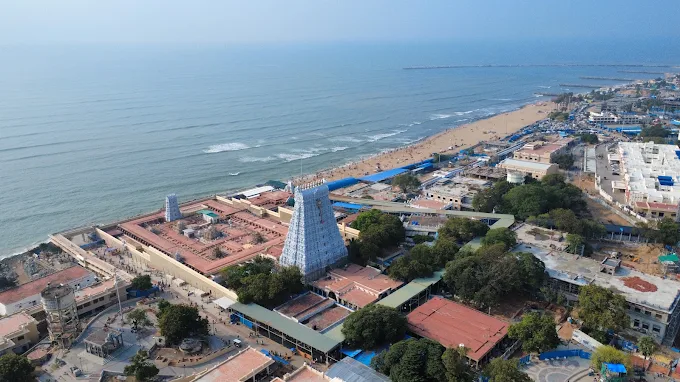
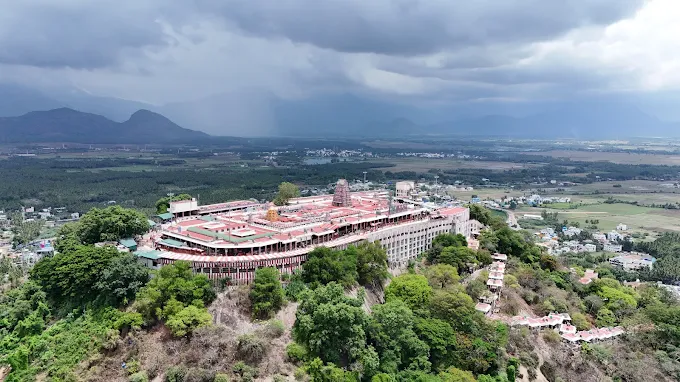
The temple is built into Thiruparankundram hill and is particularly notable for its rock-cut architecture.
The cave temple contains ancient sculptural and religious elements associated with several Hindu deities. The complex includes sacred representations connected with Shiva, Vishnu, Durga, Vinayaka and Murugan.
The rock-cut portions are associated with the Pandya period. Different parts of the larger temple complex belong to different historical periods, so the entire structure should not be assigned to a single construction date.
Thiruparankundram is therefore significant both as a Murugan pilgrimage centre and as an important example of the religious and architectural heritage of the Madurai region.
There are several architectural features of note, particularly the rock-cut portions of this hill temple from the Pandya period in the 6th century and the life-sized sculptures in the mandapams of the Nayakar period during the 16th century.
- An Aasthaana Mandapa with several artistically carved pillars leads to the entrance’s towering 150 feet (46 m) tall seven-tiered raja gopuram.
- A 1,050 ft tall granite hill at the temple’s backside with a shrine to Kashi Vishwanath at the top adds beauty to the temple’s overall front view.
- The temple’s image of Vinayaka (Ganesha) holds sugarcane and fruits.
- A single stone was used to create the inner rock cut image.
- This temple has several mandapas, including Kambathadi Mandapam, Ardha Mandapam, and Mahamandapam, which are located on different levels and connected by steps.
- Apart from Murugan, the main shrine also houses the deities Shiva, Vishnu, Vinayaka (Ganesha), and Durga. The temple follows the Shaiva worship tradition.
- All the statues of the deities are carved on parankundram rock.
- Devotees worship Shiva as Parangirinathar along with his wife Parvati as Aavudai Nayaki.
- A board showing Shiva’s dance of bliss is seen outside the sanctum.
- One of the most notable features of this temple is that Shiva and Vishnu face each other which is a rare thing in Hindu temples.
- Vedic school is also there on the banks of the temple pond.
- A carved Nandi (bull), Mayil (peacock), and mouse, the vahanas (vehicles) of Shiva, Murugan, and Vinayaka, stand in front of the Dwajasthambam, the flagstaff.
- Before Ardha Mandapam, there is a flight of six steps known as the “Shadashara Padigal.”
- The hall contains rock carvings of Mahisshasura Mardini (Durga), Karpaga Vinayagar (Ganesha), Andarabaranar, and Uggirar.
- Saravana Poigai, Lakshmi Theertham, Saniyasi Kinaru (well), Kasi Sunai, and Sathiya Koopam are the five water bodies.
History
Sambandar, a 7th-century Shaiva saint, visited Thirupparamkunram and praised the Shiva icon of the temple Uchinathar in ten Tevaram passages compiled as the First Tirumurai.
The temple is classified as Paadal Petra Sthalam, one of the 276 temples mentioned in the Saiva canon, because it is revered in Tevaram.
The temple is the third in a series of temples on the banks of the Vaigai River.
In this temple, Sambandar blessed the three Tamil chiefs, the Chera, the Chola, and the Pandya. Sundarar and Sambandar wrote the Tevaram Pathigam in this location.
Nakkirar wrote numerous poems about the Murugan. Tiruppugazh, Kandapuranam (Skanda Puranam), and other works speak of this shrine’s glory.
Deities worshipped at Thiruparankundram
Lord Murugan (Skanda or Subrahmaniya) is the principal deity associated with Thiruparankundram Murugan Temple.
The wider temple complex also contains shrines and sacred representations associated with other Hindu deities, including Shiva, Vishnu, Durga and Vinayaka.
The presence of several deities reflects the broader Hindu sacred character of the hill and temple complex.
Important Festivals
Several important festivals and observances are associated with Thiruparankundram Murugan Temple.
Panguni Uthiram has particular importance because the festival is traditionally associated with the marriage of Murugan and Deivayani.
Skanda Shashti is another major Murugan observance. It commemorates Murugan’s victory over the asura Surapadman and is therefore closely connected with the preceding part of the traditional story.
Other important observances include Vaikasi Visakam and Karthigai Deepam.
Festival dates vary from year to year according to the relevant Tamil calendar and religious calculations.
Best Time to Visit
Devotees who wish to focus on the Murugan–Deivayani marriage tradition may choose to visit during Panguni Uthiram.
Panguni is a Tamil month that generally falls during March and April. Panguni Uthiram is determined according to the lunar-star calendar, so its Gregorian date changes every year.
Devotees interested specifically in Murugan’s victory over Surapadman may instead consider Skanda Shashti.
The two observances should not be treated as the same festival, Skanda Shashti focuses on Murugan’s victory, while the marriage tradition at Thiruparankundram focuses on his divine union with Deivayani.
How far is Thiruparankundram Murugan Temple from Madurai?
Thiruparankundram Murugan Temple is approximately 8 km south of Madurai in Tamil Nadu.
Madurai is the principal city for pilgrims visiting the temple. The temple can be reached from Madurai by road and public transport.
The nearest major airport is Madurai Airport, while Madurai Junction provides an important railway connection for visitors travelling by train.
What should devotees know before visiting Thiruparankundram?
Temple timings, special puja schedules and festival arrangements can change, particularly during major celebrations.
Before travelling, devotees should verify:
- Current temple opening and darshan timings.
- Festival dates, special puja and Kalyanam timings.
- Procession schedules.
- Entry and crowd-management arrangements.
- Any current dress or temple-entry requirements.
These details are time-sensitive and should be checked again before an actual pilgrimage.
Spiritual significance of visiting Thiruparankundram
For devotees of Lord Murugan, Thiruparankundram represents an important stage. The temple connects two major themes, Murugan’s victory over evil and his divine marriage to Deivayani. It is therefore traditionally remembered as the place of Murugan’s celestial wedding after his victory over Surapadman.
The hill itself also has a long religious history, with archaeological and literary evidence showing that Thiruparankundram was an important sacred centre for centuries.
Tamil devotional and literary traditions have preserved the importance of the hill, while its rock-cut architecture provides evidence of its historical development as a religious site.
Temple Marriage Procedure
- The Bride must be 18 years and above and the Groom must be 21 years and above.
- Unmarried Certificates of the bride and Groom are required.
- Only Hindu arranged marriage is allowed.
- Aadhar card and birth certificate photocopy of Bride and the Groom is required.
- Both Bride’s and the Groom’s Parents’ photo ID proofs are required.
- Parents must be available and Advance booking for the marriage is a must.
- Same-community marriages are allowed.
- There is no online booking for the marriage. A marriage enrollment form is given at the counter.
Pilgrim Experiences
A visit to Thirupparankundram Murugan Temple offers a traditional temple atmosphere. The temple can be relatively quiet on regular weekdays, but crowds and waiting times increase on Tuesdays, weekends and festival days. Darshan takes place inside the cave temple, where the stone architecture and dimly lit sanctum add to the traditional worship experience. Visitors are advised to arrive early, allow extra time for queues and check the temple's current timings and entry rules before visiting.
How to Reach Thirupparankundram Murugan Temple
Frequently Asked Questions
Is Thiruparankundram Murugan Temple the place where Murugan married Deivayani?
Yes. Tamil tradition identifies Thiruparankundram as the sacred place where Lord Murugan married Deivayani, the daughter of Indra, following his victory over the asura Surapadman.
Is Thiruparankundram the first of Murugan’s six abodes?
Yes. Thiruparankundram is traditionally regarded as the first of Lord Murugan’s six sacred abodes, collectively known as the Arupadai Veedu.
How far is Thiruparankundram Murugan Temple from Madurai Meenakshi Amman Kovil?
Thiruparankundram Murugan Temple is approximately 8 km south of Madurai, Tamil Nadu, and can be reached from Madurai by road and public transport.